

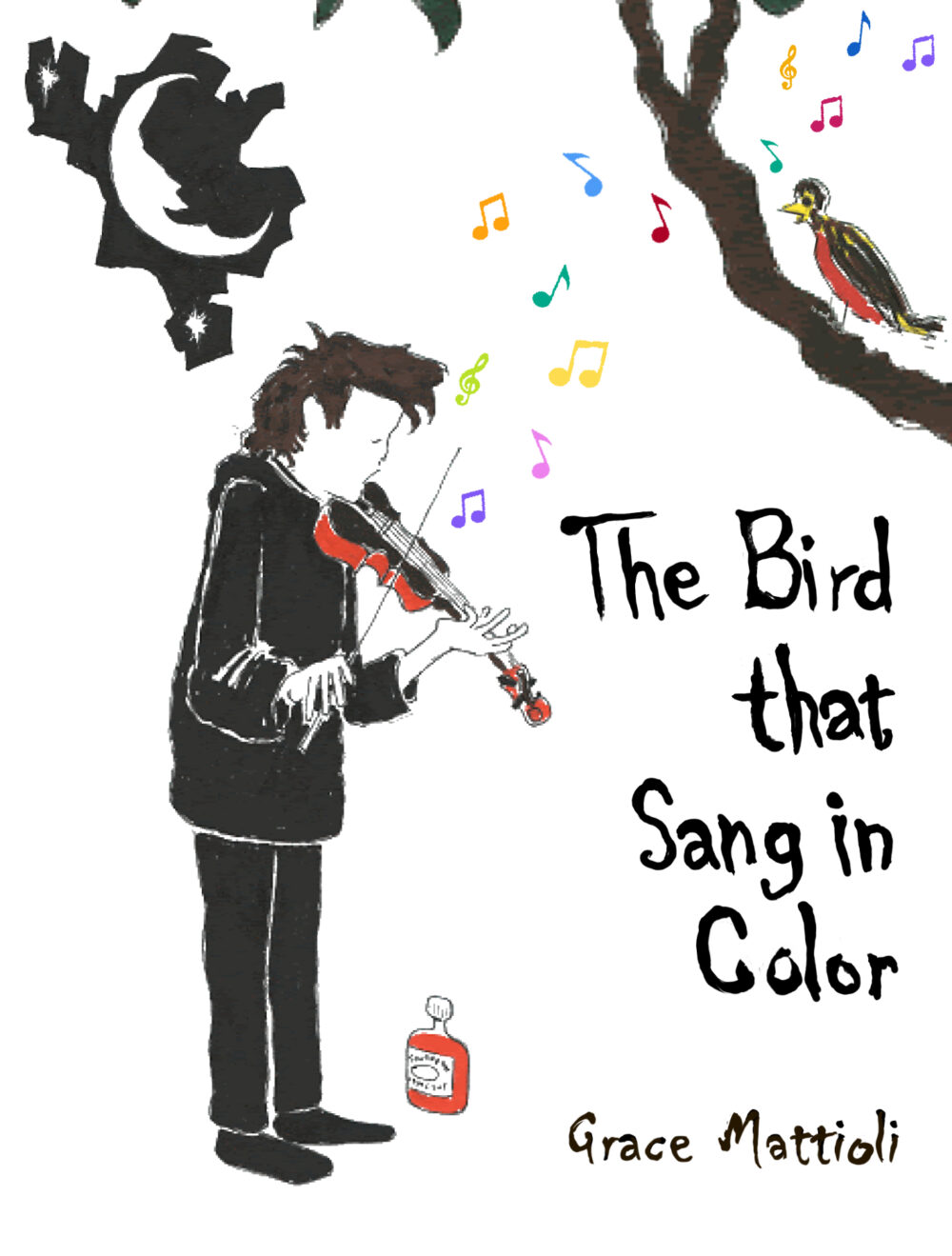
The Bibliotherapeutic Power of The Bird That Sang in Color: Finding Freedom Beyond Society’s Expectations
For my final post in this series, I want to explore the bibliotherapeutic value of my third novel, The Bird That Sang in Color—a story about disillusionment, authenticity, and what it really means to live a fulfilling life.
At the heart of the novel is Donna, a woman who, from a young age, commits herself to achieving everything society promises will bring happiness: marriage, children, a successful career, and a beautiful home. She attains all of it. And yet, something is missing. Happiness remains just out of reach.
This kind of disillusionment is something I know intimately. During my college years, I was singularly focused on getting into law school. I worked relentlessly toward that goal. But once I got there, I found myself deeply unhappy—trapped in a life I had worked so hard to build.
Donna’s journey mirrors this experience. While she pursues the “ideal life,” her older brother Vincent takes a radically different path. He rejects conventional success and instead lives in alignment with his own truth. Donna spends years trying to convince him he should want more—more stability, more achievement, more of what she believes defines a meaningful life.
But over time, something shifts.
In one pivotal moment, Vincent shows her something he has built. Donna’s instinct is to critique it, to tell him how he could improve or monetize it. But suddenly, she stops. Instead, she has a vision:
I then got a vision of a little boy building a sandcastle. He smiled at it and was filled with pride, and just as he was about to put the crowning touch on it, some other kid came along to tell him it wasn’t good enough—that it wasn’t what it should be, it was too big and impractical and that no one lived in castles anymore. The little castle builder walked away, defeated and crushed, the smile erased from his face and the shine gone from his eyes.
This moment captures something essential: how easily joy can be diminished when we impose expectations—our own or society’s—onto others.
Later, Donna discovers Vincent’s sketchbook, filled with drawings that chronicle his life. Despite lacking everything she once believed necessary for happiness, his life is rich with meaning and joy. This discovery forces her to turn inward and ask a difficult question:
What will the pictures of my own life look like?
As I was going through them, I started to think of what pictures I’d have of myself by the end of my life. I closed my eyes to visualize the pictures, expecting variety and color, but all I saw was a single black and white drawing of me sitting behind a window, trapped inside the house I always wanted, the marriage I always wanted, the life I’d always wanted. I opened my eyes and looked outside at the front yard that I once thought beautiful and full of life, but it looked drab and lifeless as a retired junkyard.
This image speaks to a quiet but devastating realization: achieving everything you thought you wanted can still leave you feeling trapped.
I’ve lived this, too—the experience of being confined by my own beliefs about what life should look like. And while leaving that life was difficult, staying in it was far worse.
That’s the deeper intention behind The Bird That Sang in Color. It’s a novel meant to help readers who feel stuck, who sense that the life they’ve built doesn’t fully belong to them. It invites them to ask the same question Donna asks:
What pictures will define your life in the end?
Donna’s transformation doesn’t happen overnight. It takes courage to step away from the familiar and move toward the unknown. But guided by Vincent’s quiet wisdom, she begins to live more authentically.
In the end, her vision of her life changes:
I can still see the colorless one of myself feeling trapped in my old house with sad eyes and frowning lips. But now, it’s only one of many because it’s no longer the endpoint of my life.
Her life expands into moments of connection, creativity, and presence:
I see one of me sitting in Vincent’s old room with him and Carmen as we listen to albums. I see one of Mom and I cooking together… There are drawings of me playing the flute and writing poetry… and one where I’m sitting with my grandchildren around me, their brand-new eyes gazing out at the world, soon to be creating pictures of their own lives.
Even her future begins to take shape—not as a rigid plan, but as possibility:
The pictures of my future are less clear because they haven’t happened yet, but I can see one of me visiting Stonehenge and one of myself writing stories. I would love to write Vincent’s story. The world sure needs to hear it.
Final Reflection
At its core, The Bird That Sang in Color is about breaking free—from expectations, from fear, from the quiet pressure to live a life that looks right on the outside but feels wrong within.
If you’ve ever felt trapped in a life you thought you were supposed to want, this story is an invitation: to question, to reimagine, and ultimately, to choose a life that feels like your own.
Because in the end, we all leave behind pictures.
The question is—will they be in color?


