
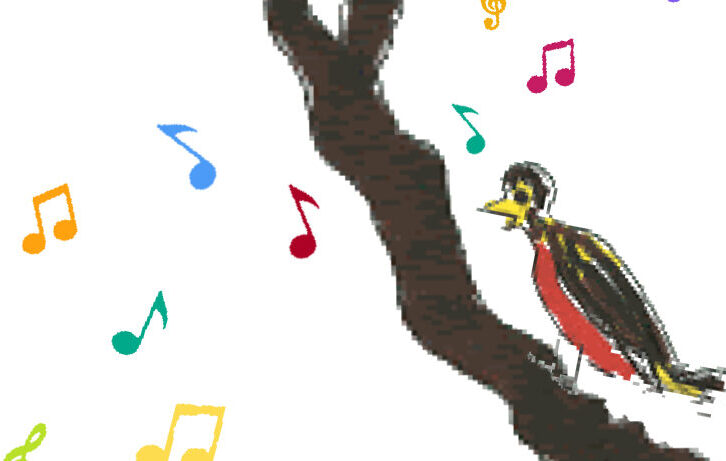
The theme of music pervades The Bird That Sang in Color. The story begins and ends with music, and throughout the novel, a variety of instruments and albums set the tone for key moments. But the musicality in this book goes beyond literal songs—it reflects the rhythm of life itself, the cadence inherent in our daily actions.
In one of the opening scenes, Donna observes Vincent walking with his head bobbing back and forth, “like he’s keeping rhythm to a song that only he can hear.” In another, she compares her mother’s cooking to a musical performance: “The music played: the chopping of vegetables, the clanging of metal spoons against pots, and the sweet sound of pouring.” Through these moments, the novel encourages readers to notice the subtle “music” present in their own everyday lives—the patterns, rhythms, and beauty often overlooked in routine moments.
Beyond music, The Bird That Sang in Color is a story about living fully and embracing curiosity. Vincent, the novel’s hero, is a true Renaissance man. He doesn’t need to leave his room to explore the world—he travels through intellectual and creative pursuits, finding fulfillment and joy in learning, creating, and imagining.
In our current times, many people may feel that the pandemic or other challenges prevent them from growing or living fully. I hope this story inspires readers to rediscover—or embark upon—new hobbies, interests, and passions. Music, in particular, is a timeless gift that allows us to transcend the ordinary and experience endless joy, even in small, everyday moments.
This post is from my blog series, “Fiction Books about Happiness.” The theme of happiness runs throughout all of my novels, including Olive Branches Don’t Grow on Trees, Discovery of an Eagle, and The Bird that Sang in Color. These books are available from all major online book sellers, including Amazon, Barnes & Noble, and Apple Books.


