
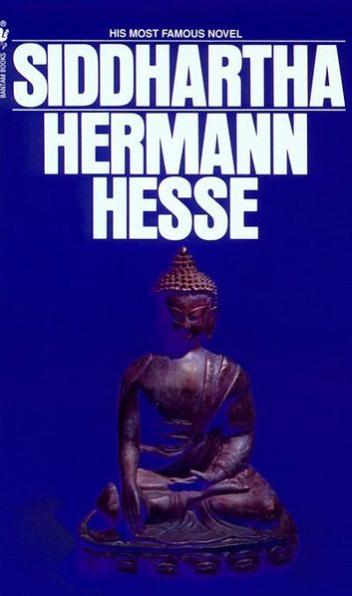
Herman Hesse’s Siddhartha is a slim novel that carries an enormous amount of wisdom—wisdom that feels even more relevant today than when it was written. Blending Eastern mysticism with Western ideas such as individualism, it tells the story of a man’s spiritual journey toward enlightenment. In my second novel, Discovery of an Eagle, the protagonist undertakes a similar journey. Unlike Siddhartha, however, Cosmo’s quest for self-discovery is largely unintentional. Yet both characters arrive at the same destination: the discovery of an indestructible core within themselves, often called the Self—a presence that lives within each of us. I’ve encountered this concept of the Self in contemporary psychology as well, particularly in therapeutic approaches such as Internal Family Systems and Acceptance and Commitment Therapy.
The Self is the wise, all-knowing part of me—the part I turn toward in moments of crisis, the voice that reminds me I’m human and doing the best I can when I make mistakes. As Siddhartha discovers, the Self is the primary source of all joy. It is infinite and enduring, unlike the external world. As he tells his friend Govinda, “Remember, the world of shapes is transitory.” Siddhartha himself was a “golden child” who rejected the path laid out for him by his father and chose, instead, the road less traveled. This spirit of individualism—a theme I’ll explore more deeply in upcoming bibliotherapy posts—runs throughout Hesse’s novel.
Although Siddhartha encountered many teachers who could impart knowledge, he ultimately learned that wisdom cannot be taught; it must arise from within. This realization comes to him as he sits by the river, where his Self finally emerges. The river—his greatest teacher—shows him how “to listen with a quiet heart and a waiting, open soul, without passion, without desire, without judgment, without opinion.” Siddhartha at the river reminds me of a scene in Olive Branches Don’t Grow on Trees, when the protagonist, Silvia, watches the sun set in Cape May. In that moment of stillness and attention, she discovers the wisdom she has been seeking on her own peace-making journey—a wisdom that comes not from outside sources, but from her own Self. Nature, too, is my temple: the place where I hear the voice of my Self most clearly.
Siddhartha also learns that suffering is an inescapable part of life, and that peace comes from “stop[ping] resisting, to love the world and stop comparing it to some world he only wished for and imagined, some sort of perfection he himself had dreamed up.” He comes to see “how beautiful the world was when one just looked at it without searching—just looked, simply and innocently.” Whenever he searched outside himself for fulfillment, he felt despair, even longing “to be rid of himself.” As he tells Govinda, “I was afraid of myself, running away from myself.” He realizes that nothing external—not even the love of his parents—can truly complete him. I have run from myself, from the pain inside that was too big to be with, even for a second. I’ve gone through a great deal of trauma in my life and have been diagnosed with complex PTSD. I discovered that people with this issue, having such profound pain, is common.
Like Siddhartha, I spent years searching for happiness outside myself rather than within. I often escaped into fantasy to avoid the pain I felt, looking to the world to rescue me, to give me more than it was capable of giving. This longing left me ungrateful for my own life and blind to the beauty of the world as it was. Eventually, I came to understand the limits of the external world and how easily it can pull me away from my Self. Like Siddhartha, I was running from myself—specifically from the part of me that held pain. Over time, I learned how to stop resisting, as Siddhartha did, and to love not only the world as it is, but all of myself as well. In my forthcoming memoir, A Dragonfly Mosaic: My Journey from Fear to Love, I chronicle my experiences in healing CPTSD.
Just as many newer schools of psychology espouse the theory of the Self, they also emphasize turning toward pain rather than resisting it, since resistance is what creates suffering. While these ideas appear in books published in the twenty-first century, Siddhartha was first published in 1922. It’s striking that modern psychology took more than a hundred years to arrive at insights Hesse already understood when he wrote this novel—one that, in my not-so-humble opinion, remains the greatest spiritual novel ever written.
Grace Mattioli is the author of three novels: “Olive Branches Don’t Grow on Trees,” “Discovery of an Eagle,” and “The Bird that Sang in Color.” She is currently working on a memoir, “A Dragonfly Mosaic,” and several short stories. She lives in Portland, Oregon with her husband and her cats. Her books are available from all major online book sellers, including Amazon, Barnes & Noble, and Apple Books.


