

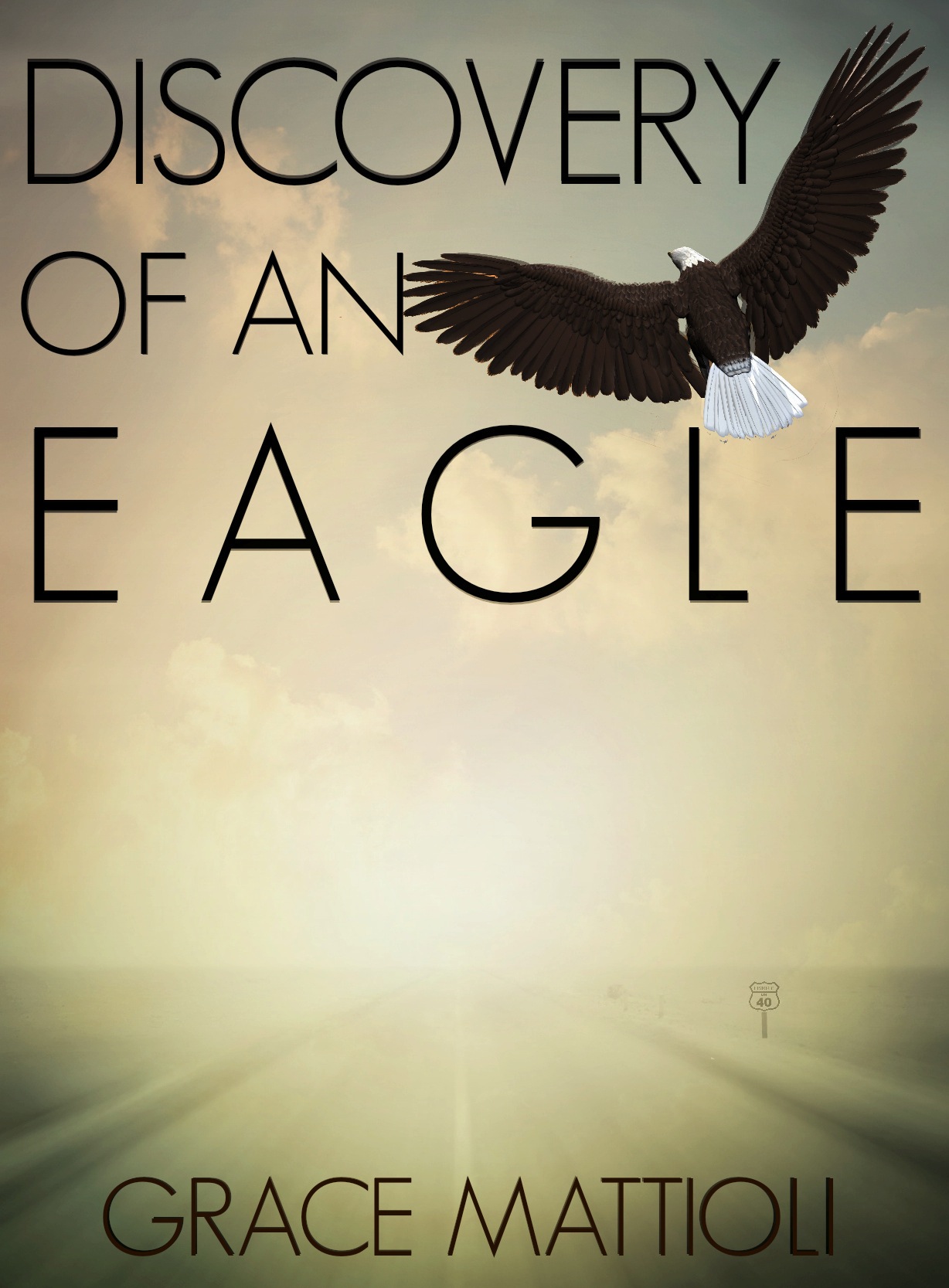
“The book isn’t just about Cosmo’s journey. It takes a hard look at the lives we live, the monotony we assume is part of adulthood, and the mediocrity we’re content to settle for. Through Cosmo’s shoes, the reader’s perspective is quietly opened to new possibilities.”
— The Lit Room Reviews
The quote above comes from my favorite review of my second novel, Discovery of an Eagle. While there are certainly worse problems than living a monotonous life, sleepwalking through existence often leads to a quiet unhappiness—a feeling of being dead inside. Over time, this disconnect pulls us away from the vital part of ourselves that gives life meaning and depth.
Like Siddhartha, Cosmo comes into contact with this lost part of himself while on a journey. Unlike Siddhartha’s awakening, however, Cosmo’s discovery is unintentional. After he and his sister, Silvia, survive a near-fatal accident, Cosmo is forced to confront the fragility of life. The encounters and experiences that follow reinforce this realization, and his healing begins.
He comes to understand that he has been living without passion, moving through life without truly inhabiting each day. Most of us live as though tomorrow is guaranteed rather than recognizing that each day is a gift. It is only when Cosmo embraces this truth that he begins to see the world’s beauty more clearly.
I first read Hermann Hesse’s Siddhartha many years ago, but during a recent rereading, I was struck by an unexpected connection. Hesse had used a line remarkably similar to one in my novel: “As Cosmo looked out the car window, he felt as if he was seeing the world for the first time in his life, and in some ways, he was.” Forgive me for drawing a comparison between my work and a literary classic, but the parallels were impossible to ignore.
I believe Discovery of an Eagle can be deeply healing for many readers. It invites them to reconnect with the wise, “seeing” part of themselves—what Carlos Castaneda describes as true awareness. By doing so, it can help free them from monotony, awaken their senses, and encourage them to live life more fully.
Enjoy the following excerpt from this book:
They drove right to the South Rim as the park ranger who greeted them had instructed. The magnificent Canyon opened itself up to the sky, which was half deep blue, and half filled with clouds. The clouds hung around the mountains as if they were formed to each other. Light came through the cloudless spaces in thick, bright strips and turned the Canyon iridescent shades of pink, red, brown, and orange. Each time the light shifted the picture changed dramatically. Cosmo thought it wouldn’t amaze him, but he was wrong.
As he stood and stared out at the wonder, a bald eagle flew by him, only a few feet in front of where he stood. He couldn’t believe that the creature had flown so close to him. It landed on a ledge for a few seconds and then took off again, its wingspan reaching across nearly the whole of Cosmo’s field of vision. Silvia stood right beside him, watching the eagle as it flew over their heads. Neither spoke a word until it flew away and disappeared behind a cloud.
“Wow!” Silvia said. “An eagle. I love eagles!” She looked like she wanted to start jumping up and down.
“Yeah,” Cosmo said, still staring at the final trace of the majestic bird. “I don’t think I’ve ever seen one so close.”
“Don’t you want to know why I love them so much?” she said, disregarding her brother’s comment.
“Why?” Cosmo asked as if humoring his sister. “Because you’re such a patriot?” He laughed, knowing well that it wasn’t the correct answer.
She looked back at him snidely and said, “Because of what they mean.”
He didn’t say anything. He knew he didn’t have to. He knew his sister would tell him the answer without being prompted to do so.
“Strength, courage, immortality, spirit, divinity,” she said, gazing into the spectacular gorge below.
He knew about eagles symbolizing courage and strength, but not about immortality, spirit and divinity. The picture of the eagle was still fresh in his mind, gracefully sweeping over the earth, its wings spread like an angel. Divinity seemed to fit just right as something that this phantom bird should symbolize. It glides along with unearthly grace to remind everyone that our own journey can be as smooth or as rocky as we chose to make it. It appears, and then it disappears as if by some divine magician, and in its brief revelation, reminds us that we all have the potential to rise above.


